Does the mirror show one shoulder higher than the other? If you are managing scoliosis, you might worry that your spinal curve is an unchangeable fate. Pilates helps people with scoliosis manage pain, improve their posture, and keep the spinal curve from getting worse.
What is Pilates for Scoliosis? A Clinical Perspective

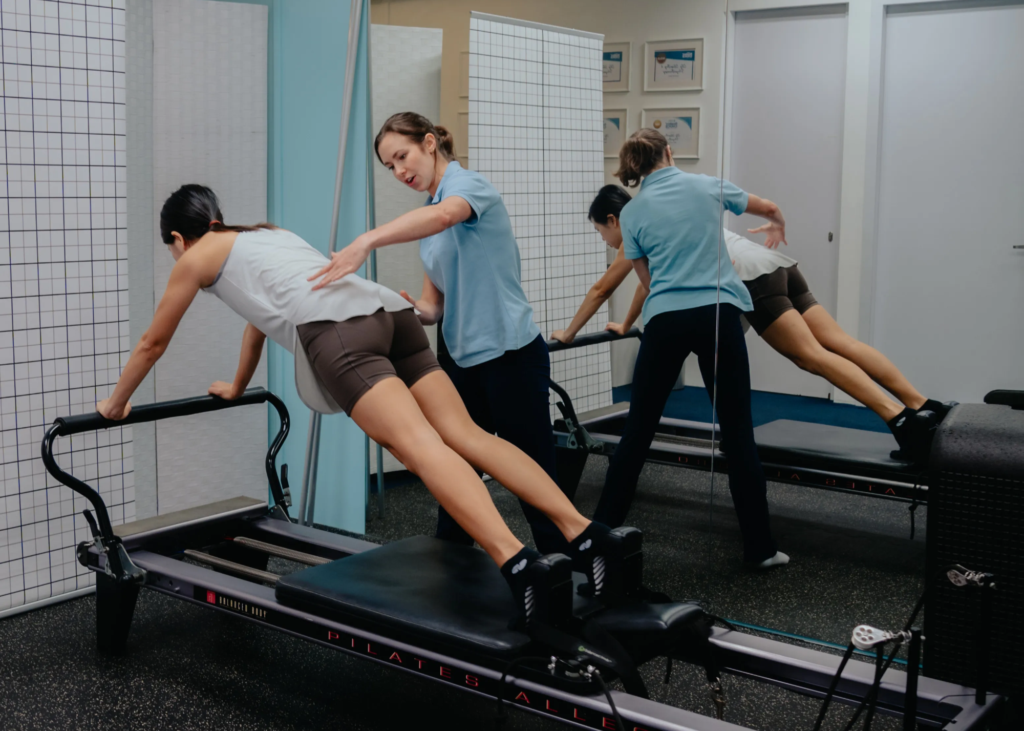
Clinical Pilates for scoliosis is a movement therapy that treats the spine as a three-dimensional structure. It moves beyond simple stretching to focus on de-rotation and elongation.
Difference between Fitness Pilates and Pilates for Scoliosis
Standard fitness Pilates focuses on general core strength and flexibility for the average, symmetrical body. In contrast, Pilates for scoliosis or Clinical Pilates is highly specific. It identifies which side of your body you are overworking and which side you are underusing.
How Breathwork Expands The Rib Cage and Improves Lung Capacity
Scoliosis often causes the rib cage to rotate, which can compress the space available for the lungs. This can lead to a decrease in respiratory efficiency. In a clinical setting, we teach rotational breathing. This technique directs the breath into the collapsed or concave areas of the ribs.
Breathing deeply expands your rib cage from the inside, helping to straighten your spine. As a result, you’ll breathe more efficiently and boost your oxygen levels.
Strengthening The Deep Stabilisers Of The Spine
The multifidus is a series of small, powerful muscles that run along the spine. In scoliosis patients, these muscles are often weak on one side and tight on the other. Targeted Pilates exercises isolate these stabilisers to provide better internal bracing. Strengthening the multifidus relieves the larger muscles that become exhausted and painful from supporting the spine.
Essential Scoliosis Exercises to Straighten Spine Awareness

Exercise may not always straighten a structural curve. However, it builds the muscular awareness you need to maintain a more neutral posture. These movements focus on symmetry and stability.
The Bird-Dog and Bridge: Building Core Stability Without Spinal Compression
The Bird-Dog is a fundamental movement for spinal health. By extending the opposite arm and leg while on all fours, you challenge your core to maintain a level back. This build-up of stability is vital for scoliosis management.
Similarly, the Bridge focuses on the posterior chain. It builds a strong spinal base by targeting the glutes and lower back without the impact of traditional weightlifting.
Corrective Scoliosis Stretching Exercises
Understanding your specific curve is essential for effective stretching.
- The Concave Side: These muscles are usually short and tight. We focus on lengthening and opening these areas.
- The Convex Side: These muscles are often overstretched and weak. We focus on strengthening and tucking these muscles back toward the midline.
This targeted approach prevents you from overstretching the side that is already too long. This avoids a common mistake often made in general yoga or stretching routines.
| Feature | Concave Side (The Cave) | Convex Side (The Hump) |
|---|---|---|
| Muscle State | Short, tight, and compressed | Overstretched, weak, and strained |
| Pilates Goal | Lengthening and opening | Strengthening and de-rotating |
| Breath Focus | Direct inhale to expand | Controlled exhale to stabilise |
Expert Scoliosis Management at City Osteopathy & Physiotherapy
At City Osteopathy & Physiotherapy, we don’t just look at your X-ray; we look at how you move. Our team provides a multidisciplinary environment where clinical expertise meets movement therapy.
Our Integrated Approach: Combining Clinical Pilates with Manual Therapy
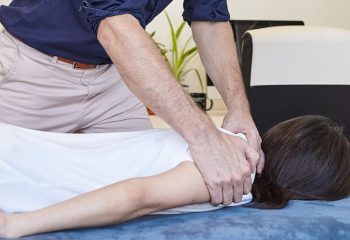
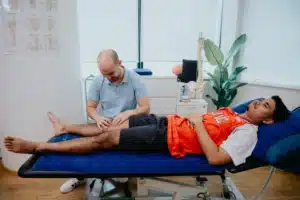
Our therapists use manual therapy to release tight tissues and prep your body for movement. This ensures your Clinical Pilates sessions are more effective rather than just exercising on a stiff foundation.
Personalised Assessment: Identifying Your Specific Curve Pattern Before You Move
Because every scoliosis curve is unique, we start with a comprehensive assessment of your alignment and X-rays. This data allows us to prescribe bespoke exercises that counter your specific imbalances rather than reinforce them.
Why Choose Our Physiotherapist-led Sessions
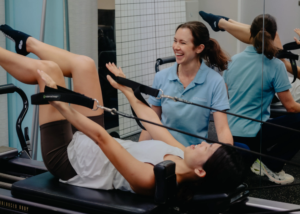
A fitness instructor at a commercial gym may not understand the biomechanics of a structural spinal deformity. Our sessions are led by Physiotherapists who have years of medical training. We understand the contraindications and the physiological limits of your condition. Exercise with confidence knowing our clinical oversight provides a safe, effective programme backed by medical science.
Frequently Asked Questions About Pilates for Scoliosis
Is Reformer Pilates safe for the spine?
Yes, Reformer Pilates is exceptionally safe when supervised by a trained professional. The Reformer uses springs to provide resistance or assistance, which can be adjusted to suit your strength level. This is often safer than mat-based exercises because the machine helps guide your alignment and prevents you from cheating with the wrong muscles. It allows for a greater range of motion while keeping the spine supported and elongated.
At what age does scoliosis stop progressing?
In many cases, the most rapid progression happens during the adolescent growth spurt. Once a person reaches skeletal maturity, usually in their late teens, the curve often stabilises. Adulthood can still bring spinal changes like disc degeneration or bone loss. Pilates strengthens your core to protect your spine and prevent aging from worsening your curve.
Are there any exercises to avoid with scoliosis?
While everyone is different, there are a few general movements that may cause issues:
- High-impact activities: Running or jumping can place repetitive stress on an asymmetrical spine.
- Excessive back extension: Deep backbends can pinch the joints in the curved areas of the spine.
- Unsupported rotation: Fast, twisting motions without core engagement can strain the ligaments.
- Heavy lifting: Lifting heavy weights overhead can compress the vertebrae and increase the curve depth.
Ready to take control of your spinal health?
Don’t let your curve dictate your quality of life. At City Osteopathy & Physiotherapy, our dedicated team is ready to design a clinical movement programme specifically for you. Book your initial assessment and halt curve progression.