
If you’re comparing Yoga and Pilates in Singapore, you likely want to fix back pain, poor posture, core weakness, or tight muscles.
Many of our patients at City Osteopathy & Physiotherapy come in feeling unsure about which one to choose. When weighing the benefits of Pilates vs yoga, the truth is both offer significant advantages. But when you are dealing with pain or a medical condition, the right choice depends entirely on your body and your diagnosis.
This article explains the differences and shows when Therapeutic Yoga is the safer, more effective choice for you.
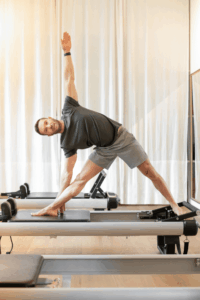
What Is Pilates?
Pilates is a structured exercise system that focuses on building core strength, aligning the spine, and improving muscle control.
Pilates strengthens deep core and back muscles to improve posture and prevent injuries. It is a common tool for physical rehabilitation.
What is Pilates good for?
- Strengthening core muscles
- Improving posture
- Supporting spinal stability
- Enhancing body control
- Reducing the recurrence of lower back pain
Pilates can be helpful for individuals with weak core muscles or postural strain from prolonged desk work. However, Pilates is still exercise-based. If pain is already present, unsupervised classes may aggravate symptoms without a proper clinical assessment.
What Is Yoga?
Yoga focuses on flexibility, breathing, and mind-body awareness. Many people in Singapore turn to yoga to reduce stress, improve mobility, and release muscle tension.
Yoga helps to:
- Improve flexibility
- Reduce muscular tightness
- Calm the nervous system
- Enhance balance and coordination
However, general yoga classes are not designed for individuals with disc injuries, chronic back pain, or complex musculoskeletal conditions.

That is where Therapeutic Yoga differs.
Unlike general yoga, Therapeutic Yoga provides medical guidance and adapts to your specific condition. At City Osteopathy & Physiotherapy, our Naturopath and Yoga Therapist, Swetha, tailors yoga practices based on your diagnosis, pain patterns, and overall health.
If you’re in pain, see how our structured Therapeutic Yoga can help.
Yoga vs. Pilates: What Is the Real Difference?
While yoga and Pilates share some similarities, their primary goals set them apart.
- Pilates focuses on strengthening and stabilising.
- Yoga focuses on flexibility and the regulation of the nervous system.
If your issue is primarily muscle tightness or stress-related tension, yoga may help. If your issue is core weakness and postural instability, Pilates may be appropriate.
Yoga vs. Pilates: What Is the Real Difference?
Comparing yoga and Pilates side by side makes their differences much clearer. While both improve movement and body awareness, their primary goals, structure, and clinical applications differ.
Here is a simple comparison to clarify yoga vs Pilates:
| Category | Yoga | Pilates |
|---|---|---|
| Primary Goal | Improve flexibility, regulate the nervous system, enhance mind-body awareness | Strengthen core muscles, improve stability and posture |
| Movement Style | Flowing poses or static holds with breath control | Controlled, precise, repetitive strengthening movements |
| Equipment | Usually mat-based; may use blocks, straps, bolsters | Mat-based or specialised equipment (Reformer, Cadillac, Chair) |
| Best For | Stress relief, muscle tightness, mobility, relaxation | Core weakness, postural correction, rehabilitation support |
If you are already in pain, skip the trends and preferences. Base your decision on a clinical assessment instead. Many people feel confused after trying both because neither practice addressed their specific condition.
Yoga vs. Pilates for Back Pain in Singapore
Back pain is one of the most common reasons people search for “Yoga vs. Pilates Singapore.”
Here is what matters:
- If your back pain is caused by core weakness and instability, structured strengthening is important.
- If stiffness, stress, or muscular guarding causes back pain, use controlled mobility and breathwork to find relief.
However, many cases involve both. This is why a personalised therapeutic approach often produces better outcomes than general group classes.
Our Naturopathy services work closely with musculoskeletal care to address underlying inflammation, stress, and lifestyle triggers that may contribute to persistent pain.
Why Therapeutic Yoga May Be the Safer Starting Point

If you are unsure whether yoga or Pilates is right for you, Therapeutic Yoga offers a middle ground. It combines:
- Clinical assessment
- Targeted movement
- Breath regulation
- Nervous system support
- Individualised progression
Rather than asking you to choose between yoga or Pilates, we assess your body first. Swetha, our Naturopath and Yoga Therapist, uses medical knowledge to ensure your movements correct your condition rather than aggravate it.
This is especially important if you have:
- Chronic lower back pain
- Disc bulges
- Sciatica
- Neck and shoulder tension
- Stress-related pain
- Postural imbalances
You can book directly with Swetha here.
Should You Choose Yoga or Pilates?
If you are completely pain-free and looking for general fitness, both can be highly beneficial. If you struggle with constant pain, frequent flare-ups, or an unclear diagnosis, start with guided therapeutic care to stay safe.
Instead of choosing based on popularity, choose based on what your body needs. At City Osteopathy & Physiotherapy, we take a personalised approach. We assess, identify the root cause, and guide you toward the right movement therapy.
For many patients, Therapeutic Yoga provides the structure of rehabilitation with the calming benefits of yoga.
Final Thoughts on Yoga vs. Pilates Singapore
The debate about Yoga vs. Pilates should not leave you feeling more confused.
The better question is not which is superior, but rather which is appropriate for your condition. If you are unsure, experiencing pain, or worried about worsening symptoms, professional guidance makes all the difference.
To learn more about Therapeutic Yoga with our Naturopath and Yoga Therapist Swetha, visit here.
Or book your session directly here.
Your recovery should be guided, not guessed.