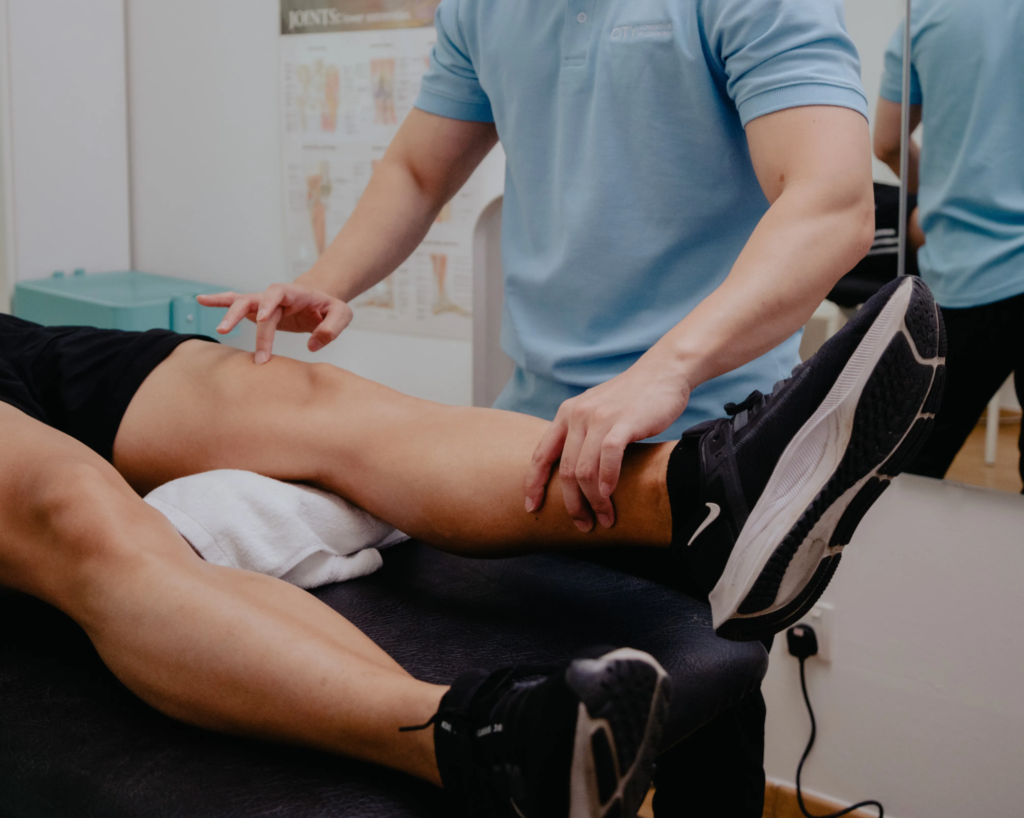
A sudden sharp pain on the inner side of your knee during a football match or a deep lunge on the badminton court can be alarming. Often, this signals an MCL injury.
The medial collateral ligament (MCL) is one of the most commonly injured structures in the knee. Fortunately, targeted physiotherapy provides an effective, non-surgical path to recovery. By restoring joint stability and muscle strength, we ensure your MCL knee health is restored while the tissue heals.
What is Medial Collateral Ligament (MCL) Injury?
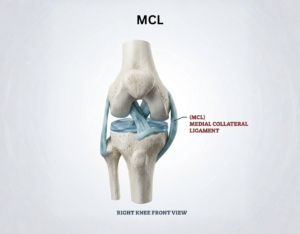
An MCL injury involves damage to the medial collateral ligament, which is the thick band of tissue running along the inside of your knee. This ligament’s primary job is to act as a stabilising tether, preventing the knee from collapsing inward (valgus stress).
Whether it is a minor medial ligament sprain or a complex MCL tear, the severity dictates the recovery timeline.
Common Symptoms of an MCL Injury
If you have injured your medial collateral ligament, you will likely notice specific physical changes. These often include:
- Immediate Pain: Sharp discomfort specifically located on the inner edge of the knee joint.
- The Pop Sound: A distinct snapping or popping sensation at the moment the injury occurs.
- Swelling and Bruising: Inflammation typically appears within hours along the inner knee line.
- Instability: A wobbly feeling or the sensation that your knee might give way when you put weight on it.
- Stiffness: Difficulty fully straightening or bending the leg due to pain and fluid build-up.
Three Grades of MCL Injuries
MCL injuries are typically categorised into three distinct levels to determine the best rehabilitation path.
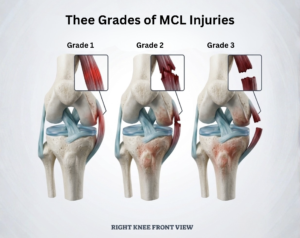
| Grade | Severity | Description | Typical Recovery |
|---|---|---|---|
| Grade 1 | Mild | A minor MCL sprain where fibres are stretched but not torn. | 1 to 3 weeks |
| Grade 2 | Moderate | A partial MCL tear that causes some joint laxity or instability. | 4 to 6 weeks |
| Grade 3 | Severe | A complete MCL rupture where the ligament is fully torn. | 8 to 12+ weeks |
Why Does MCL Injury Happen?
An MCL injury usually happens when the outside of your knee takes a hard hit. It can also occur if your foot stays planted while your leg twists awkwardly. This creates a valgus force that stretches the inner ligament beyond its breaking point.

Sports Most Linked to MCL Injuries in Singapore
In Singapore, our active community often encounters these injuries during high-intensity social sports.
- Football: Late-night social leagues often see injuries from sliding tackles or sudden changes in direction on artificial turf.
- Badminton: The repetitive deep lunges and quick lateral shifts required on the court put immense pressure on the inner knee.
- Pickleball: As this sport grows in popularity, we see more pivoting injuries where the foot stays fixed while the body turns.
Who Usually Gets an MCL Injury?
While athletes are high-risk, anyone can sustain this injury. Common risk factors include using improper footwear on specific surfaces, such as wearing flat trainers on slippery turf. A lack of specific strength training in the hip abductors and quadriceps also leaves the knee vulnerable. Fatigue during a long match is another major factor, as tired muscles cannot support the ligaments during explosive movements.
How City Osteopathy & Physiotherapy Can Help You Heal Faster
At City Osteopathy & Physiotherapy, we don’t just look at the knee. We look at how your whole body moves to ensure you don’t just get better, but stay better.
Our Holistic Multi-Modal Approach
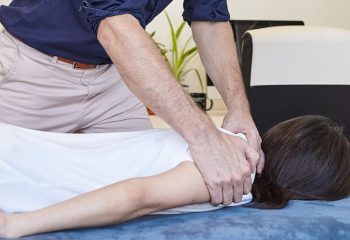
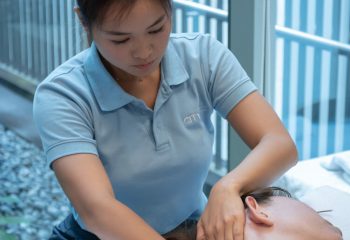
We combine the structural expertise of Osteopathy with the functional rehabilitation of Physiotherapy. An Osteopath might look at your hip and ankle alignment to find out why your knee was overloaded in the first place. Meanwhile, our Physiotherapists build the strength needed to support your joints during sport.
Advanced Recovery Tools
- Shockwave Therapy: This uses acoustic waves to stimulate collagen production and accelerate tissue repair.
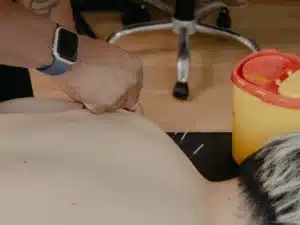
- Dry Needling: A technique used to release deep muscle knots in the quads and hamstrings that often tighten up after an injury.
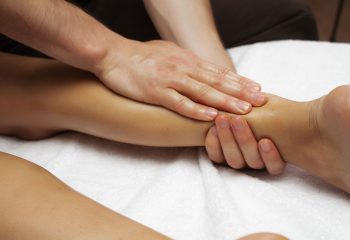
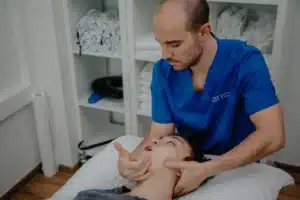
- Manual Therapy: Hands-on techniques to restore normal joint mechanics and reduce stiffness.
Clinical Pilates & Strength Conditioning
Transitioning from being pain-free to sport-ready is where many people fail. Our Clinical Pilates and targeted conditioning programmes ensure your knee can handle the specific demands of your sport, whether that is the quick turns of football or the lunges of badminton.
Frequently Asked Questions about MCL Injury
Can a physiotherapist diagnose an MCL injury?
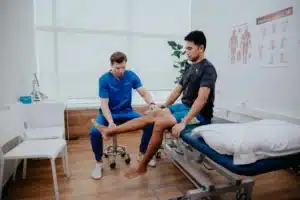
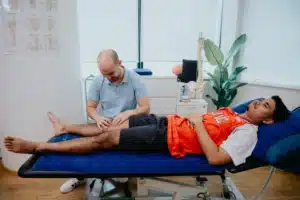
Yes, a professional clinical assessment is often the most efficient way to begin your recovery. Our therapists use specific physical tests, such as the Valgus Stress Test, to check for joint laxity and tenderness.
Can You Walk on a Fully Torn MCL?
Many people are surprised to learn that you can often walk with a Grade 3 injury. However, your gait will likely be altered and the knee may feel very unstable. For a complete rupture, you might initially need crutches or a hinged brace to protect the ligament while the primary healing fibres begin to knit back together.
Why does the MCL heal better than the ACL without surgery?
The medial collateral ligament has a superior blood supply compared to the ACL. This high level of vascularity means your body can deliver oxygen and essential nutrients to the injury site quite effectively. Because of this natural biological advantage, the ligament has an excellent capacity for self-repair. Conservative, holistic rehabilitation is the primary recommendation for the vast majority of our patients.
What exercises should I avoid during my MCL recovery?
You must avoid any lateral or side-to-side movements for at least the first four weeks following a significant tear. Deep squats and heavy weighted lunges should also be removed from your routine early on because they put excessive tension on the healing tissue. Additionally, you should avoid deep friction massage directly on the injury site during the acute phase. Rubbing the area too firmly can disrupt the delicate new fibres trying to bridge the gap in the ligament.
What are the risks of leaving an MCL injury untreated?
Ignoring the pain and failing to follow a structured rehab plan can lead to chronic issues. Without proper guidance, the ligament may heal in a lengthened state, which results in permanent joint instability. This lack of support often leads to secondary injuries, such as meniscus tears. Over time, the improper mechanics of the knee joint can also contribute to the development of early onset arthritis.
Start Your Recovery Journey at City Osteopathy & Physiotherapy
We have convenient locations across Singapore, Woodleigh, Tampines, Woodlands, Orchard, & Jurong East. Every knee injury is unique, which is why we provide personalised recovery plans tailored to your lifestyle and goals. Don’t let a knee injury keep you off the court. Book your assessment today and get back to the sports you love.