Published on: 18 September 2026
Key Takeaway: Dry needling and acupuncture both use thin needles, but they take different approaches and have different treatment goals. Dry needling mainly targets muscle trigger points, tension, and movement-related pain. Acupuncture takes a broader approach and may be used for pain and other health concerns. The right option depends on your symptoms, goals, and medical history.
What Is the Difference Between Dry Needling and Acupuncture?
Both treatments use thin needles, but dry needling and acupuncture are not the same treatment. They differ in their purpose, treatment approach, and the conditions they are commonly used to address.
How dry needling works
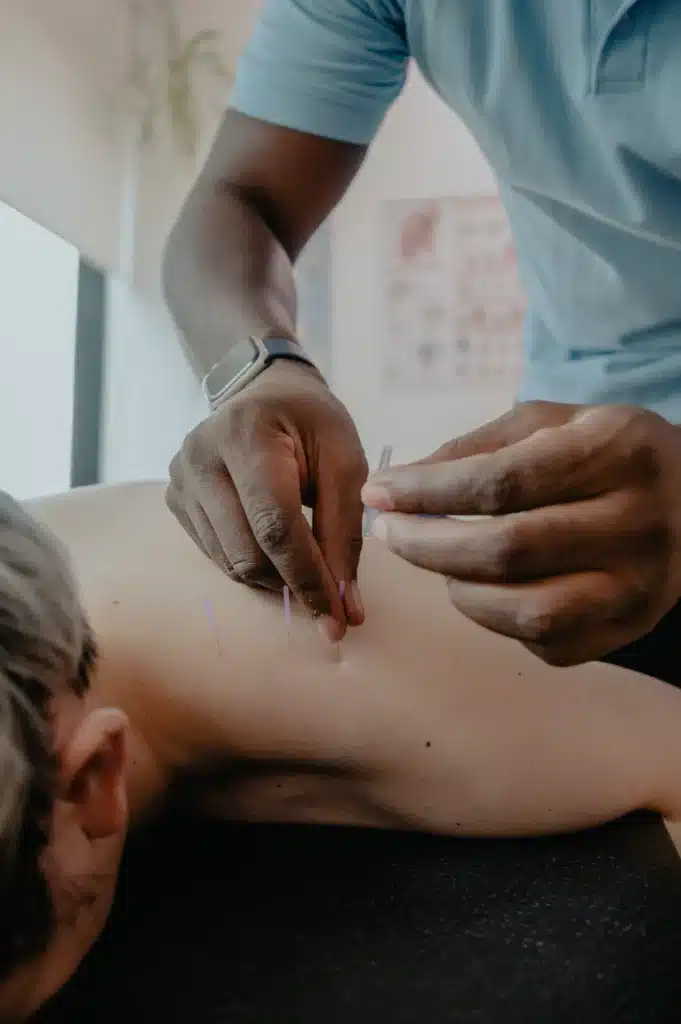
Dry needling is commonly used to target muscles and muscle trigger points. A trained provider places a thin needle into selected areas of muscle to address pain, tension, or movement problems.
How acupuncture works
Acupuncture uses very thin needles at specific points on the body. It has roots in Traditional Chinese Medicine, while modern research also examines how acupuncture may affect the nervous system and other tissues.
For more information about acupuncture’s effectiveness and safety, see the National Center for Complementary and Integrative Health’s acupuncture overview.
How the treatment techniques differ
In simple terms:
- Dry needling: Focuses mainly on muscles, trigger points, and movement-related problems.
- Acupuncture: Uses specific acupuncture points and may be used for several types of pain and other health concerns.
The treatment approach also depends on the provider’s training and the condition being treated.
How long needles stay in and what you may feel
Treatment methods vary. Dry needling may cause a brief twitch, cramp, or aching sensation when a muscle is targeted. Acupuncture often causes little discomfort, although some people notice tingling, pressure, warmth, or heaviness.
What Is Dry Needling?
Dry needling uses thin needles to target specific areas of muscle tissue. It is often used as part of a broader physical therapy plan that may also include exercise, stretching, or manual therapy.
What are trigger points?
Trigger points are sensitive areas within muscle tissue that may cause pain when pressed. The pain can sometimes be felt in another area of the body.
A provider may target muscle trigger points during dry needling as part of a broader treatment plan.
How dry needling is performed
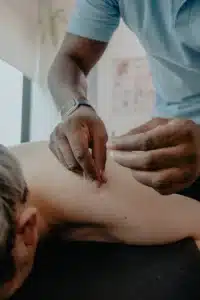
A trained provider inserts a thin needle into targeted muscle tissue. Depending on the technique, the needle may be briefly inserted, moved, or adjusted based on the person’s response.
Common dry needling techniques
Techniques vary by provider and treatment goal. Some approaches focus on trigger points, while others target muscle tissue more broadly.
How dry needling is used with physical therapy
Dry needling is often one part of a larger rehabilitation plan. It may be combined with exercise, movement training, stretching, or manual therapy to address pain and movement limitations.
What Is Acupuncture?
Acupuncture involves inserting very thin needles into specific points on the body. It has roots in Traditional Chinese Medicine and has been practiced for centuries.
How acupuncture approaches treatment
Traditional acupuncture uses concepts such as Qi and meridians. These are part of the traditional framework of acupuncture.
Modern researchers are also studying how acupuncture may affect the nervous system and tissues where needles are placed. Its effects are not fully understood.
How acupuncture is performed
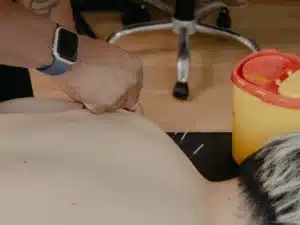
A practitioner inserts fine needles into selected points. The needles may be gently manipulated by hand or, in some cases, stimulated with a small electrical current.
Conditions acupuncture may help manage
Research suggests acupuncture may help some people with conditions such as:
- Back or neck pain
- Knee pain related to osteoarthritis
- Certain headaches and migraines
- Other types of pain
Evidence varies by condition, so acupuncture is not a guaranteed treatment for every health problem. NCCIH reports evidence of potential benefit for several pain conditions, including back or neck pain and knee osteoarthritis.
What Are the Benefits of Dry Needling and Acupuncture?
Both treatments may provide benefits for some people, but results can vary.
Potential benefits of dry needling
Dry needling may help reduce muscle pain and improve movement or range of motion for some musculoskeletal conditions. It is often used alongside other physical therapy techniques rather than as a stand-alone treatment.
Research on dry needling continues to develop, and evidence varies by condition. For example, NCCIH reports that research on dry needling for low-back pain suggests it may be helpful, but the evidence was not strong enough for definite conclusions.
Potential benefits of acupuncture
Acupuncture may help manage several types of pain. Research has found potential benefits for back and neck pain, knee osteoarthritis pain, and some headaches.
What the research says about each treatment
The research base differs between the two approaches. Acupuncture has been studied across a wider range of pain conditions, while dry needling research focuses more heavily on musculoskeletal problems.
The available evidence does not support saying that one treatment is always better than the other.
What Does Dry Needling or Acupuncture Feel Like?
Knowing what to expect can make a first treatment feel less stressful. Sensations vary from person to person.
What to expect during dry needling
You may feel a small prick when the needle enters the skin. Targeting a sensitive muscle area may cause a brief twitch, cramp, or aching sensation.
What to expect during acupuncture
Acupuncture needles are very thin, and many people experience little discomfort. Some people notice mild tingling, pressure, warmth, or heaviness.
Soreness and recovery after treatment
Temporary soreness, bruising, or tenderness can occur after either treatment. Dry needling may leave treated muscles feeling sore or tight for a short time.
What Are the Risks and Side Effects?
Both treatments can cause side effects, although serious complications are uncommon when they are performed properly by qualified practitioners.
Dry needling risks and side effects
Possible side effects include:
- Temporary soreness or stiffness
- Bruising
- Fatigue
- Lightheadedness
Proper technique and hygiene are important. Rare but serious complications can occur, particularly when needling is performed near the chest. NCCIH notes that serious complications from dry needling are rare.
Acupuncture risks and side effects
Acupuncture may cause minor bleeding, bruising, or soreness. Serious complications are rare but can occur when treatment is performed incorrectly or with nonsterile needles. Using sterile, single-use needles helps reduce the risk of infection.
Who should avoid treatment or speak with a healthcare provider first
Your health history can affect whether either treatment is appropriate. Talk with a healthcare provider before treatment if you are pregnant, take medication that affects bleeding, have a condition that may affect healing, or are unsure whether needling is safe for you.
Which Treatment Is Right for You?
There is no single answer to which is better, dry needling or acupuncture. Your symptoms, treatment goals, health history, and the provider’s assessment all matter.
When dry needling may be a better fit
Dry needling may be worth discussing if you have:
- Localized muscle pain or tightness
- Muscle trigger points
- Movement limitations
- A condition being treated through physical therapy
When acupuncture may be a better fit
Acupuncture may be worth considering if you are looking for an option for certain types of pain, including back pain, neck pain, osteoarthritis-related pain, or headaches.
Can you have both treatments?
Some people may receive both treatments as part of their overall care. However, combining them is not necessary for everyone.
Discuss your treatment goals with your healthcare providers before combining approaches.
How to Choose a Qualified Practitioner
Choosing a properly trained provider is an important part of safe treatment. Training and licensing requirements can vary by location.
Training and licensing for acupuncture
Licensing requirements for acupuncture practitioners vary by state. Check that the practitioner meets the licensing requirements where you live. NCCIH also recommends checking state requirements when choosing a complementary health practitioner.
Training and regulation for dry needling
Requirements for who can perform dry needling also vary by state or jurisdiction. The American Physical Therapy Association’s state-by-state dry needling information provides information about laws and regulations related to dry needling by physical therapists. APTA notes that the regulatory landscape differs between states.
Ask about the provider’s professional license, specific dry needling training, and experience with your condition.
Questions to ask before your first appointment
Consider asking:
- What training and credentials do you have?
- How often do you treat my condition?
- What should I expect during and after treatment?
- What are the possible risks for me?
- How does this treatment fit into my overall care plan?
Frequently Asked Questions
Is dry needling the same as acupuncture?
No. Both use thin needles, but they take different approaches and have different treatment goals. Dry needling typically focuses on muscles and trigger points, while acupuncture uses specific acupuncture points and has roots in Traditional Chinese Medicine.
Which is better for muscle pain?
Neither treatment is automatically better for everyone. Dry needling is commonly used for musculoskeletal pain and muscle trigger points, while acupuncture has also been studied for several types of pain.
Does dry needling hurt more than acupuncture?
The experience varies. Dry needling may cause a brief twitching or aching sensation when a muscle is targeted. Acupuncture often causes less noticeable sensations, although some people experience mild tingling or pressure.
How long does it take to see results?
There is no set timeline. Some people may notice changes after one session, while others may need several treatments. Results depend on the condition, treatment approach, and individual factors.
How often can you have dry needling or acupuncture?
There is no single schedule for everyone. Treatment frequency depends on your condition, response to treatment, and the practitioner’s recommendations.