Published on: 28 October 2026
When your shoulder has been stiff and painful for months, everyday activities such as reaching overhead, getting dressed, or reaching behind your back can become difficult. If stretching and other conservative treatments have not helped enough, you may be looking for a non-surgical option to improve your movement.
Extracorporeal shockwave therapy (ESWT), also called shockwave therapy, is one treatment being studied for frozen shoulder. But how effective is it, what does the research show, and could it be suitable for you? Understanding its potential benefits and limitations can help you discuss your options with a physiotherapist.
Key Takeaways
- ESWT may help reduce frozen shoulder pain and improve shoulder movement, but results can vary.
- Research has reported promising outcomes, although the evidence is limited by small studies and differences in treatment protocols.
- Treatment involves an assessment followed by shockwave application to selected areas around the shoulder.
- ESWT may be used alongside rehabilitation exercises and other physiotherapy approaches rather than as a replacement for them.
- A physiotherapy assessment can help determine whether ESWT is appropriate for your symptoms and goals.
Can ESWT Help Frozen Shoulder?
Yes, ESWT may help reduce pain and improve shoulder movement in people with frozen shoulder, although it does not guarantee recovery. Research has reported improvements in pain, range of motion, and daily function, including in some people whose symptoms have persisted despite conservative treatment. However, the strength of the evidence varies between outcomes, and the best treatment dose and schedule have not been firmly established. ESWT is therefore best considered as a possible treatment option following an individual assessment, rather than a guaranteed solution or a suitable treatment for everyone.
How ESWT Works on a Frozen Shoulder
Frozen shoulder, also known as adhesive capsulitis, involves pain and stiffness associated with changes in the capsule surrounding the shoulder joint. These changes can restrict movement, making activities such as lifting your arm or reaching behind your back uncomfortable or difficult.
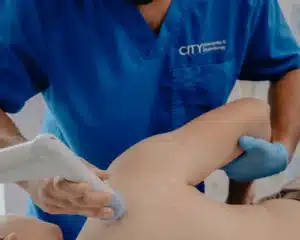
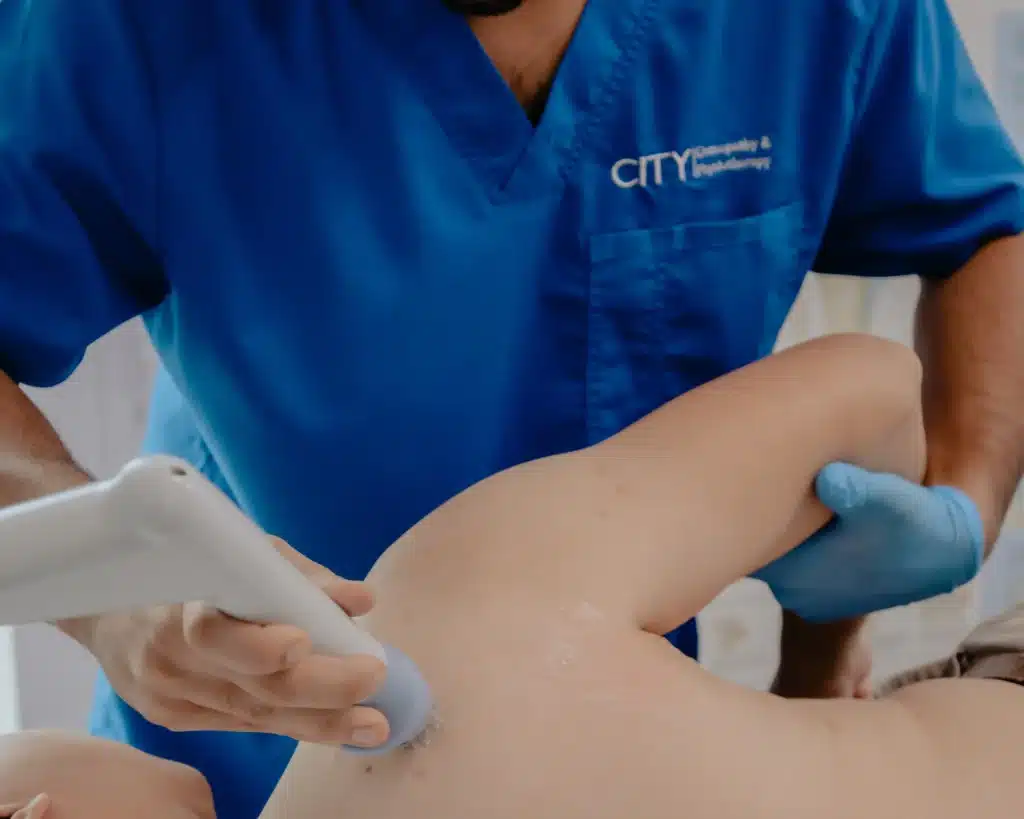
ESWT delivers acoustic pressure waves to selected areas around the shoulder using a handheld applicator. The treatment is intended to influence pain and the response of the affected tissues. Studies have investigated whether ESWT can help reduce symptoms and improve shoulder mobility, but its precise effects on frozen shoulder and the most effective treatment protocol remain uncertain. You can also read about the benefits of shockwave therapy for more general information about this treatment approach.
What Does the Research Say About ESWT for Frozen Shoulder?
| Outcome | What studies found | Strength of evidence |
|---|---|---|
| Pain | A 2025 systematic review found improvements in pain among people with chronic frozen shoulder and type 2 diabetes. Other studies have also reported promising results. | Promising findings, but evidence is limited by the number and quality of studies and the specific patient group. |
| Range of motion | Studies have reported improvements in shoulder movement, including lifting and rotating the arm. A 2026 trial also found greater improvements in several movement measures with a higher-dose protocol than with a basic-dose protocol. | Promising findings, but results may vary across treatment protocols and study populations. |
| Daily function | Some studies reported improvements in disability and the ability to perform everyday activities as symptoms improved. | Limited evidence; further high-quality studies are needed. |
| Compared with steroid injections | Small comparative studies have investigated ESWT and corticosteroid injections. Findings vary, and the available evidence does not establish that one option is best for everyone. | Limited evidence; current comparisons are insufficient to establish which treatment is best for different patients. |
| High dose vs basic dose | A 2026 trial involving 48 participants found greater improvements in several shoulder movement measures at 12 weeks after one high-dose session of 6,000 pulses compared with a basic-dose session of 3,000 pulses. Both groups received ESWT, so the study did not establish how much improvement occurred compared with receiving no ESWT. | Preliminary evidence from one small trial without an untreated control group; further studies are needed to establish the most appropriate dose and confirm the treatment’s effects. |
Diabetes has been a particular focus of research because frozen shoulder is more common among people with diabetes. The 2025 systematic review included seven studies involving 352 participants with type 2 diabetes, so its findings should not automatically be applied to everyone with frozen shoulder.
For more detail, see the 2025 systematic review and meta-analysis published in Physical Therapy (PMID 40401517) and the 2026 study of high-dose ESWT for adhesive capsulitis.
Limitations of the Current Evidence
The findings are encouraging, but several limitations should be considered:
- Small trials: Some studies involve relatively few participants, making their findings less certain.
- Short follow-up: Many studies assess outcomes over weeks rather than establishing long-term effects.
- Different protocols: Studies vary in shockwave type, dosage, treatment location, and number of sessions, making comparisons difficult.
- Specific patient groups: Some evidence, including the 2025 systematic review, focuses on people with diabetes and may not apply equally to all patients.
More high-quality research is needed to determine the most effective ESWT protocol, which patients are most likely to benefit, and how long any improvements may last.
What Happens During ESWT for Frozen Shoulder?
An ESWT appointment generally involves an assessment, treatment planning, and application of the shockwave device. The exact process depends on your symptoms, shoulder movement, and the treatment approach selected by your clinician.
- Assessment: Your physiotherapist reviews your symptoms, medical history, and shoulder movement to assess whether ESWT may be appropriate. They may also consider other possible causes of shoulder pain and stiffness.
- Positioning: You will be positioned so the affected shoulder can be accessed comfortably. Your clinician will explain the procedure and what sensations you may experience.
- Shockwave application: A handheld applicator is placed against selected areas around the shoulder. The clinician adjusts the treatment according to the area being targeted and your response.
- Session duration: At City Osteopathy & Physiotherapy, a standard appointment typically lasts 30–45 minutes, including the consultation and treatment. The time spent applying shockwaves will depend on your individual treatment plan.
- Number and spacing of sessions: Shockwave therapy for chronic conditions commonly involves 3–6 sessions, typically spaced about one week apart. However, this is a general guide, not a fixed schedule for frozen shoulder. The number and frequency of sessions may vary depending on the severity and stage of the condition, individual circumstances, and how the patient responds to treatment. Further sessions may be recommended based on the patient’s progress and the physiotherapist’s assessment.
Are There Side Effects of ESWT for Frozen Shoulder?
ESWT can cause temporary discomfort or local reactions around the treated area. Possible side effects include:
- Soreness or tenderness around the shoulder after treatment.
- Redness in the treated area.
- Bruising around the application site.
- A brief flare in pain before symptoms settle.
Tell your clinician if the treatment is particularly uncomfortable or if you notice symptoms that concern you. Your suitability for ESWT should be assessed before treatment, taking your health history and individual circumstances into account.
How ESWT Fits Into Frozen Shoulder Rehabilitation
ESWT may be used alongside physiotherapy to help manage symptoms and support progress towards improved shoulder movement. The rehabilitation plan should be tailored to your symptoms, mobility and tolerance rather than relying on shockwave treatment alone.
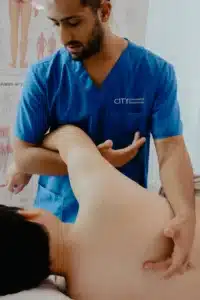
Depending on your assessment and stage of recovery, your physiotherapist may recommend:
- Stretching and range-of-motion exercises to work gradually towards improved shoulder mobility.
- Progressive strengthening to rebuild strength and support everyday activities as your movement improves.
- Manual therapy where appropriate to support movement and help manage stiffness.
The aim is to match treatment to your needs and progress, with adjustments if symptoms change. Learn more about frozen shoulder treatment and the approaches that may be considered for this condition.
Who Might Consider ESWT for Frozen Shoulder?
ESWT may be worth discussing with a healthcare professional if you:
- Have shoulder pain and stiffness that have lasted for months and continue to affect daily activities.
- Have made slow progress with exercises or other conservative approaches alone.
- Have been advised that steroid injections may not be suitable for you and want to understand other options. Discuss alternatives with your doctor.
These factors do not automatically mean ESWT is the right choice. An individual assessment matters because shoulder stiffness can have different causes, and the most appropriate treatment depends on your diagnosis, symptoms, medical history, and goals.
Frequently Asked Questions About ESWT for Frozen Shoulder
Is ESWT painful for frozen shoulder?
You may feel pressure or discomfort as the shockwave applicator is used around the shoulder. The sensation varies between individuals and depends on the area treated and the settings used. Tell your clinician if the treatment feels too uncomfortable so they can reassess your tolerance and adjust the approach where appropriate.
Can ESWT be used at any stage of frozen shoulder?
Not necessarily. Frozen shoulder is commonly described in three stages: the freezing stage, the frozen stage and the thawing stage. Whether ESWT is appropriate depends on your symptoms, the stage and severity of the condition, your medical history and the available evidence. A clinician can assess whether it may be suitable as part of your treatment plan.
How much does ESWT cost at City Osteopathy & Physiotherapy?
At City Osteopathy & Physiotherapy, the standard physiotherapy session includes a consultation and physiotherapy treatment, with reassessment included in follow-up sessions. Shockwave therapy is an additional treatment modality that may be used when clinically appropriate, and it is charged separately at S$55 per use.
The standard physiotherapy session fee is S$210 for the first session and S$190 for follow-up sessions. Sessions with senior practitioners cost S$225. All prices exclude 9% GST, and the shockwave therapy add-on fee is charged in addition to the applicable session fee.
For full details, visit the Fees & Insurance page or contact the clinic to confirm the total cost for your appointment.
ESWT may be an option for some people with persistent frozen shoulder symptoms, but research does not guarantee a particular result or establish one protocol as best for everyone. The decision should take into account your diagnosis, symptoms, treatment history, and rehabilitation goals. A physiotherapy assessment can help you understand your options and whether shockwave therapy may be appropriate. To discuss your next steps, book a shockwave therapy assessment.