Have you felt a sudden pop in your knee while pivoting on a pickleball match, or noticed a stubborn ache after squatting to pick the ball up? A meniscus tear is one of the common knee injuries seen in Singapore, affecting athletes and desk workers alike. Understanding what it is, its common symptoms, and non-surgical treatment options is the first step toward getting back on your feet.
What is a Meniscus Tear?
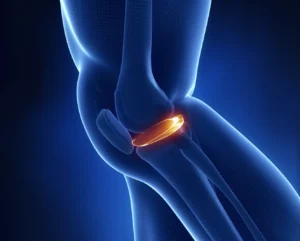
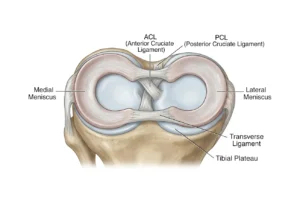
Each knee contains two C-shaped cartilage discs called menisci. They act as shock absorbers, distributing load evenly across the joint and protecting the underlying bone surfaces. When these discs are stressed beyond their tolerance, whether from a sudden force or years of repetitive strain, they can develop a tear. The severity ranges from a small fraying at the edge to a complete split through the tissue.
How Meniscus Injuries Occur: Sports vs. Degenerative Wear
Meniscus injuries generally fall into two categories depending on how the damage happens:
- Acute Traumatic Tears: These happen suddenly. They are common in athletes who play sports requiring rapid changes of direction, such as football, netball, or rugby. A sudden twist, a bad tackle, or a deep squat under a heavy load can cause the tissue to split.
- Degenerative Tears: These occur gradually over time. As we age, the cartilage naturally weakens and loses its elasticity. For older individuals, a minor, everyday movement like stepping out of a taxi or kneeling down to garden can be enough to cause a tear in worn tissue.
Common Meniscus Tear Symptoms
Knee pain can have many causes, and not every ache points to a meniscus tear. Knowing which signs to look for helps you seek the right care sooner rather than later.
Top Three Signs of a Meniscus Tear in the Knee
The signs of a meniscus tear include:
- Localised joint-line pain: You will typically feel a sharp or dull ache directly along the joint line on either the inside or outside of your knee.
- Delayed swelling and stiffness: Unlike a ligament tear which swells immediately, a meniscus injury usually develops stiffness and swelling over 24 to 48 hours as joint fluid accumulates.
- Mechanical symptoms: Clicking, catching, popping, or a locking sensation where the knee temporarily refuses to straighten fully. This occurs when a torn fragment becomes trapped between the joint surfaces.
What is Commonly Mistaken for a Meniscus Tear?
Because the knee is a complex network of tissues, several other conditions can easily mimic a cartilage tear.
| Condition | Primary Difference from a Meniscus Tear |
|---|---|
| Patellar Tendinopathy | Pain is located at the front of the knee, right under the kneecap, rather than along the sides of the joint line. |
| MCL Sprain | Pain occurs along the inner ligament and is caused by sideways forces, though it frequently occurs alongside a medial tear. |
| Knee Osteoarthritis | Features widespread, chronic joint wear that is visible on an X-ray, rather than an isolated cartilage tear. |
Medial vs. Lateral Meniscus Tear: What’s the Difference?
If you have received an MRI report, you may have encountered the terms medial or lateral and wondered what they mean for your recovery. The knee contains two distinct shock absorbers, meaning a medial meniscus tear impacts the inner aspect of the joint while a lateral meniscus tear affects the outer side.
Medial Meniscus Tear: Inside Knee Pain
A medial meniscus tear affects the C-shaped cartilage on the inner side of your knee. This is the most common of the two injuries because the medial cartilage is firmly attached to the inner collateral ligament, making it less flexible. When your foot stays planted on the ground while your body twists outward, this inner tissue bears the brunt of the force.
Lateral Meniscus Tear: Outside Knee Pain
A lateral meniscus tear involves the U-shaped cartilage on the outer side of your knee joint. This cartilage is more mobile than its inner counterpart, meaning it can glide out of harm’s way more easily. However, when a lateral meniscus tear does occur, it is often due to high-impact pivoting or jumping sports, and it requires precise rehabilitation to ensure long-term joint tracking.
Non-Surgical Meniscus Tear Treatment at City Osteopathy & Physiotherapy
Many people worry that a cartilage tear requires immediate surgery. However, clinical evidence shows that conservative, non-invasive management is another effective option for stable or degenerative tears, allowing patients to achieve excellent functional recovery without the risks of an operation.
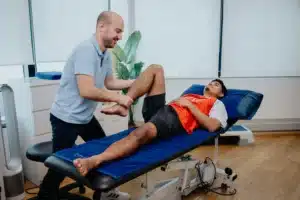
Combined Physiotherapy and Osteopathy for Knee Rehabilitation
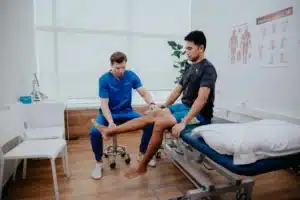
- Physiotherapy: progressive load-based strengthening for quadriceps, hamstrings and calf muscles; supervised exercise to restore range and neuromuscular control; gait retraining when needed.
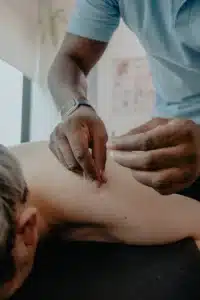
- Osteopathy: manual release of myofascial tension, joint mobilisation and full-body biomechanical correction to reduce abnormal knee loads.
- The combined approach targets both the injured tissue and the movement patterns that caused it, reducing recurrence and improving function.
Advanced Modalities: Shockwave Therapy & Manual Mobilisation
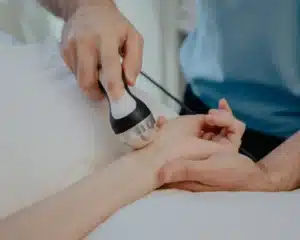
- Shockwave therapy: promotes local tissue healing and can reduce pain when used as part of a staged rehabilitation plan.
- Manual joint mobilisation: improves knee mobility and decreases protective muscle guarding.
- We use evidence-based modalities alongside exercise to promote natural repair while avoiding invasive steps.
Can a Meniscus Tear Heal Without Surgery?
Whether a tear can heal on its own depends heavily on its location, which is divided into two distinct structural zones:
- The Red Zone: The outer third of the meniscus has a rich blood supply. Small tears in this zone have an excellent capacity to heal completely with conservative therapy.
- The White Zone: The inner two-thirds lack blood vessels and cannot heal structurally. However, targeted physical therapy can make these tears completely asymptomatic by strengthening the surrounding muscles to take over the work of shock absorption.
Conservative Healing Time vs. Post-Surgical Milestones
For patients pursuing non-surgical rehabilitation, a typical recovery timeline with consistent physiotherapy is 6 to 12 weeks for return to daily activities, with sport-specific return taking longer depending on the demands involved. While a full surgical repair can extend your meniscus tear healing time to 3 or 6 months. Incorporating physiotherapy performed before surgery (prehab) has been shown to improve post-surgical outcomes by maintaining muscle strength and joint range of motion ahead of the procedure.
Frequently Asked Questions About Meniscus Tear
Is it okay to keep walking with a meniscus tear?
Yes, if walking does not cause sharp pain, sudden clicking, or locking. Straight-line walking is generally safe and helps maintain joint circulation, but you must avoid sudden pivoting, twisting, or carrying heavy loads while the tissue is vulnerable.
What activities or exercises should you avoid with a meniscus tear?
You should avoid deep weighted squats, lunges, pivoting sports like tennis or badminton, and running on hard concrete surfaces. These activities place excessive twisting and compressive forces directly onto the healing cartilage.
What happens if a meniscus tear is left completely untreated?
Leaving an unstable tear untreated can cause the loose cartilage flap to rub against the smooth surfaces of your joint. Over time, this abnormal friction accelerates wear and tear, increasing your long-term risk of developing knee osteoarthritis.
Start Your Recovery Journey at Our Singapore Clinics
Do not let a persistent knee ache or clicking sensation stop you from enjoying your life. Our multidisciplinary team is ready to design a non-surgical management plan tailored specifically to your unique injury. Visit us at any of our convenient locations in the CBD, Novena, Bukit Timah, Woodleigh, or Jurong to get started.